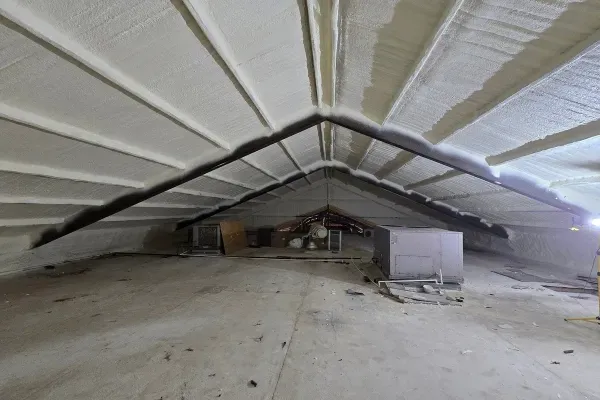
The Best Insulation For Crawl Spaces, Garages, And Attics In Northeast Texas
Your crawl space, garage, and attic each require specific insulation approaches based on moisture levels, temperature extremes, and intended use. Not all insulation works the same across different spaces in your home, and pretending otherwise costs you money every single month. Getting this wrong means wasted energy, uncomfortable rooms, and expensive do-overs. Getting it right transforms your home into an efficient, comfortable space that protects your investment for decades.
Why Northeast Texas Homeowners Need Different Insulation Solutions
Texas heat and humidity create conditions that destroy inadequate insulation faster than you'd believe possible. Crawl spaces battle ground moisture and seasonal flooding that traditional materials absorb like sponges, becoming breeding grounds for mold and losing all thermal value.
Garages swing between blazing afternoon heat and cooler mornings, requiring insulation that handles massive temperature differentials without degrading.
Attics reach 150 degrees during summer, turning your top floor into an oven unless proper thermal barriers block that heat transfer. What works in Colorado fails miserably here because Northeast Texas demands moisture resistance, high R-values, and materials that maintain performance in extreme conditions.
Generic insulation recommendations ignore these realities, leaving homeowners frustrated with poor results despite following "expert" advice from people who've never spent a July afternoon in an uninsulated Texas garage.
Comparing Spray Foam, Fiberglass, and Cellulose for Crawl Spaces
The best insulation for crawl space applications must solve moisture problems while providing thermal protection. Here's how materials stack up:
Closed-cell spray foam creates an impermeable vapor barrier with R-values of 6 to 7 per inch, preventing ground moisture from entering your home while sealing air leaks completely
Fiberglass batts absorb moisture like a sponge, sag within months, and provide zero air sealing, making them the worst choice despite low initial cost
Blown cellulose settles significantly and offers no moisture resistance, leaving gaps and encouraging mold growth in humid conditions
Spray foam insulation transforms crawl spaces from moisture nightmares into dry, conditioned areas that protect floor systems and HVAC ducts. Traditional materials fail because they weren't designed for below-grade applications facing constant humidity challenges.
Best Insulation for Garage Spaces That Stay Comfortable Year-Round
What's the best insulation for garage conversions, workshops, or attached garages impacting your home's efficiency? Spray foam wins again, but the choice between open-cell and closed-cell depends on your specific needs.
Open-cell spray foam delivers excellent sound dampening with R-values around 3.7 per inch, perfect for reducing noise from power tools or band practice.
Closed-cell foam provides maximum thermal protection and adds structural rigidity to garage doors and walls, ideal when temperature control matters most.
Both types seal air gaps that fiberglass leaves wide open, preventing conditioned air from escaping through countless cracks around door frames, electrical outlets, and wall penetrations.
Garage insulation isn't just about comfort during projects. Attached garages directly impact your home's energy efficiency, with poorly insulated spaces forcing HVAC systems to work overtime compensating for thermal bridging through shared walls.
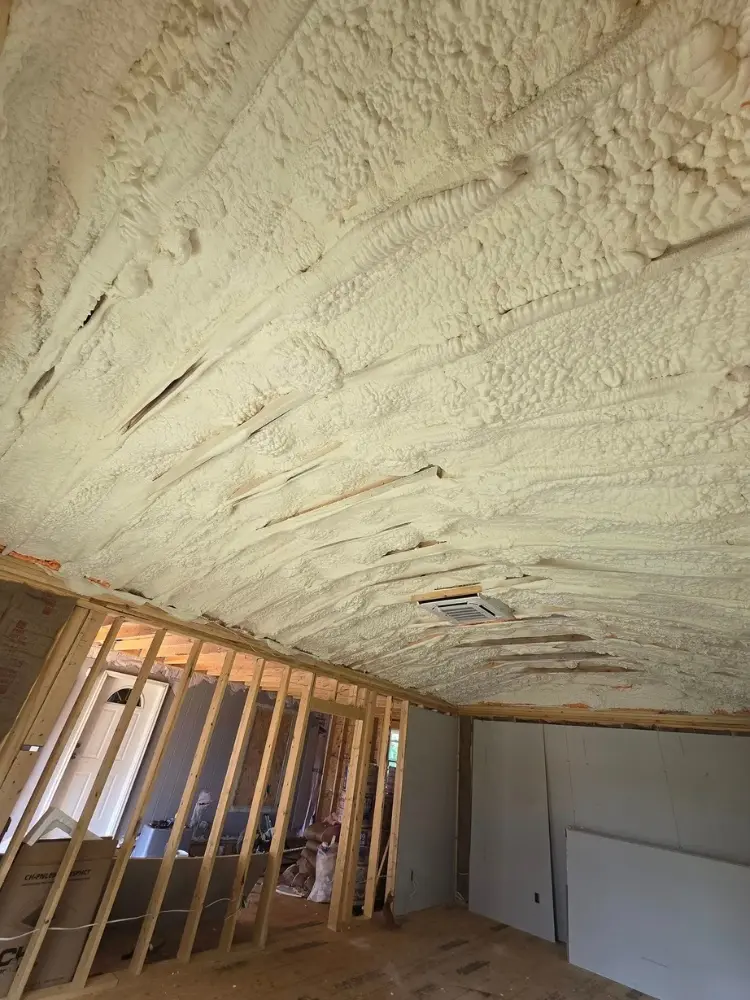
What Makes Spray Foam the Best Attic Insulation in Hot Climates
Why is spray foam considered the best attic insulation for Texas homes? Because it doesn't just slow heat transfer like traditional materials. It stops air movement completely, addressing the real culprit behind energy waste. Fiberglass batts allow hot attic air to infiltrate living spaces through convective loops, destroying their rated R-value performance by up to 50 percent in real-world conditions.
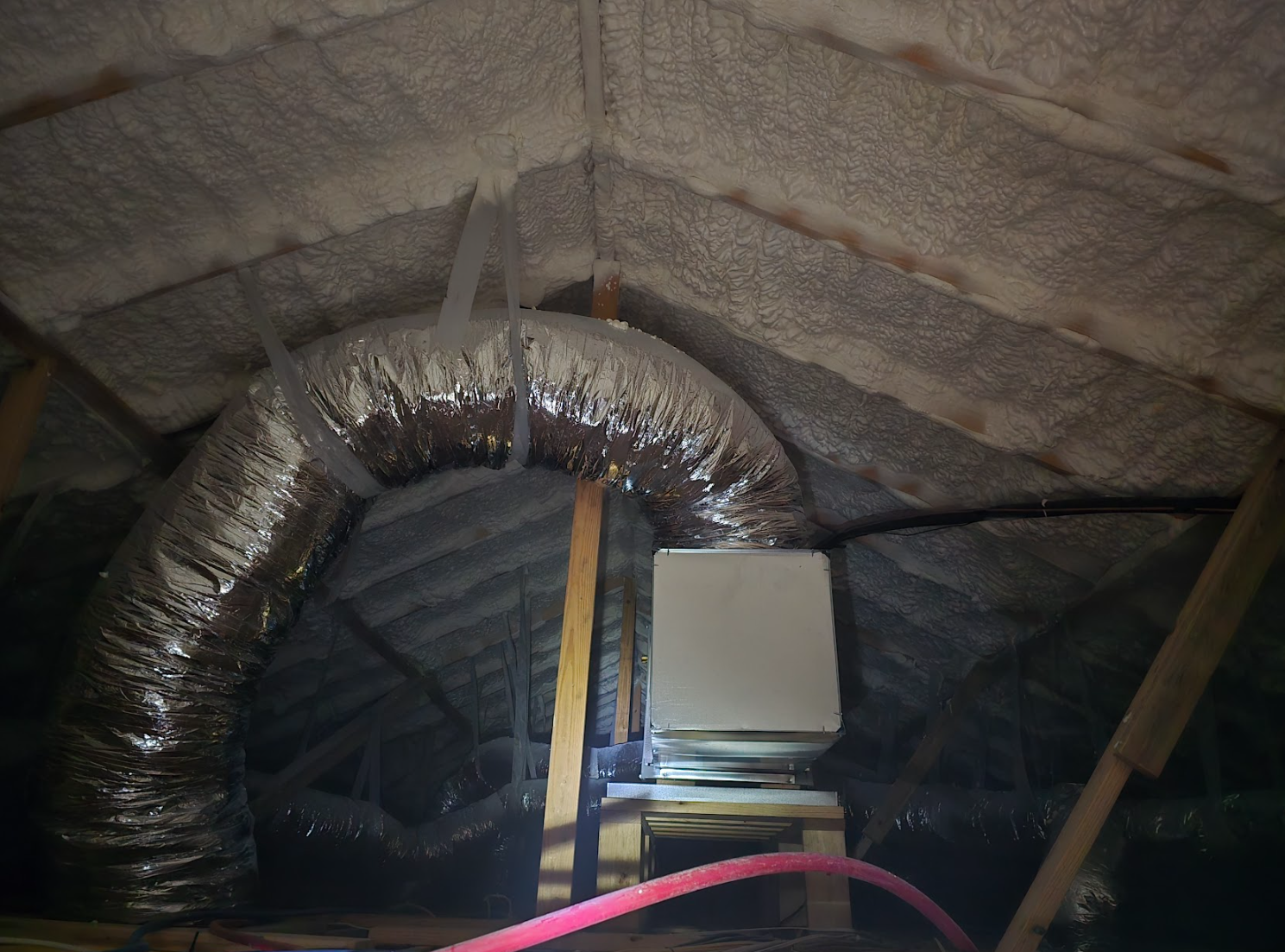
Closed-cell spray foam applied to roof decks creates a conditioned attic space, protecting HVAC ducts from extreme temperatures and eliminating the single biggest source of energy loss in most homes.
Open-cell foam costs less and works beautifully when applied to attic floors, providing superior air sealing compared to blown cellulose while maintaining breathability.
The question isn't whether spray foam outperforms traditional attic insulation. It's which type fits your budget and building configuration best.
Understanding R-Value Requirements for Texas Homes
R-value measures thermal resistance, but higher numbers don't automatically mean better performance if air sealing fails. Northeast Texas building codes recommend:
Attics: R-38 to R-49 depending on HVAC placement and roof configuration.
Crawl spaces: R-19 to R-25 for optimal moisture control and thermal protection
Garages: R-13 to R-19 for attached spaces, less critical for detached structures
Closed-cell spray foam achieves these targets with less thickness than traditional materials due to superior air sealing properties. Three inches of closed-cell delivers R-21, meeting crawl space requirements while providing complete moisture protection.
Traditional materials need significantly more thickness to reach equivalent R-values, which is often impossible in space-constrained areas. Smart homeowners focus on effective R-value after accounting for air leakage, not just laboratory ratings that ignore real-world installation gaps.
How Much Is Spray Foam Insulation Compared to Traditional Materials
Spray foam insulation costs run higher initially but deliver better long-term value than cheaper alternatives. Expect closed-cell spray foam prices around $1.50 to $3.50 per square foot installed, while open-cell costs $0.75 to $2.00 per square foot.
How much is spray foam insulation really costing you? Less than continuing to waste money on utility bills and repeated insulation upgrades. Professional installation includes surface preparation, precise application ensuring proper density and coverage, and manufacturer warranties backing decades of reliable performance.
Choosing the Right Insulation Type for Your Northeast Texas Property
Stop guessing about which insulation makes sense for your specific situation. Professional assessment considers your home's age, construction type, existing insulation condition, moisture issues, and budget constraints before recommending solutions.
Crawl spaces with standing water problems need remediation before any insulation installation, while attics with inadequate ventilation require different approaches than sealed roof deck applications. Garage insulation strategies vary dramatically between detached workshops and attached spaces sharing walls with living areas.
903 Spray Foam brings decades of combined experience solving Northeast Texas insulation challenges, understanding exactly how our climate impacts different materials and applications.
We explain options honestly, never pushing unnecessary upgrades while ensuring you understand tradeoffs between initial investment and long-term performance.
Generic advice fails because every property presents unique challenges requiring customized solutions, not one-size-fits-all cookie-cutter approaches that ignore your specific needs.
Get Expert Insulation Solutions from 903 Spray Foam
Stop tolerating uncomfortable rooms and inflated energy bills when proven solutions exist. 903 Spray Foam delivers the best insulation for crawl spaces, garages, and attics throughout Northeast Texas, serving Sumner, Paris, Greenville, Dallas, Honey Grove, Plano, and Sulphur Springs with family-owned reliability and BBB-accredited professionalism.
We're proud members of the Paris-Lamar County Chamber of Commerce, committed to helping our community reduce energy costs and improve home comfort. Our team uses premium USA-made spray foam materials from trusted manufacturers, providing both open-cell and closed-cell options matched to your specific applications.
Call (903) 609-5907 or visit 903sprayfoam.com to schedule your free consultation. We'll assess your property, discuss your goals and budget, and provide transparent pricing with detailed explanations of what you're getting and why it matters.
Your home deserves insulation that actually works, and you deserve contractors who deliver results that last decades.
FREQUENTLY ASKED QUESTIONS
What type of insulation is best for crawl spaces in humid climates?
Closed-cell spray foam is the best insulation for crawl space applications in humid areas because it creates a complete vapor barrier that prevents ground moisture from entering your home while providing superior R-value performance. Traditional materials like fiberglass absorb moisture and lose effectiveness quickly.
Should I insulate my garage if it's not heated or cooled?
Yes, especially for attached garages. The best insulation for garage spaces prevents thermal bridging into your home and makes the space more usable year-round. Even unheated garages benefit from temperature stabilization that protects vehicles and stored items from extreme temperature swings.
How does spray foam insulation cost compare to fiberglass over time?
While spray foam insulation cost is higher upfront ($1.50-$3.50 per sq ft for closed-cell), it lasts the lifetime of your home without replacement and delivers 30-50% energy savings. Fiberglass requires replacement every 10-15 years and performs poorly due to air leakage, making spray foam more cost-effective long-term.
What R-value do I need for attic insulation in Northeast Texas?
Northeast Texas attics should achieve R-38 to R-49 for optimal energy efficiency. Closed-cell spray foam reaches these levels with 6-8 inches, while open-cell requires 11-14 inches. The best attic insulation combines high R-value with complete air sealing for maximum performance.
Can I use open-cell spray foam in my crawl space?
Open-cell spray foam isn't recommended for crawl spaces because it lacks vapor barrier properties needed in below-grade applications. Closed-cell spray foam is the best insulation for crawl space areas due to its moisture resistance and structural benefits.
Does spray foam insulation really pay for itself through energy savings?
Yes. Homeowners typically see 30-50% reductions in heating and cooling costs, with spray foam paying for itself within 3-7 years. When you consider the federal tax credit (up to $1,200 through December 2025) and the fact that spray foam lasts 50+ years without replacement, the return on investment is substantial.
Which is better for garage insulation, open-cell or closed-cell spray foam?
The best insulation for garage applications depends on your priorities. Open-cell excels at sound dampening and costs less, perfect for workshops. Closed-cell provides maximum thermal protection and structural rigidity, ideal when temperature control matters most. Both outperform fiberglass significantly.
Articles you might be interested in


